SiteWalk, by Symantiq
SiteWalk is a B2B SaaS product for multimodal data collection and analysis: teams walk a commercial site, capture findings by photo, voice and text, and the product turns that into structured, analysable records on the condition of the premises. It's used across a wide range of industries, including hospitality, transport and facilities management, and is in use on site at the premises of multiple global brands. I lead product, design and strategy, and a fair amount that doesn't sit neatly under any of those. Working across the product, the operations and the AI as one connected system is what lets a small team roll it out and scale across all those touchpoints, making quick decisions and responding fast.
Mapping the whole thing before touching the UI
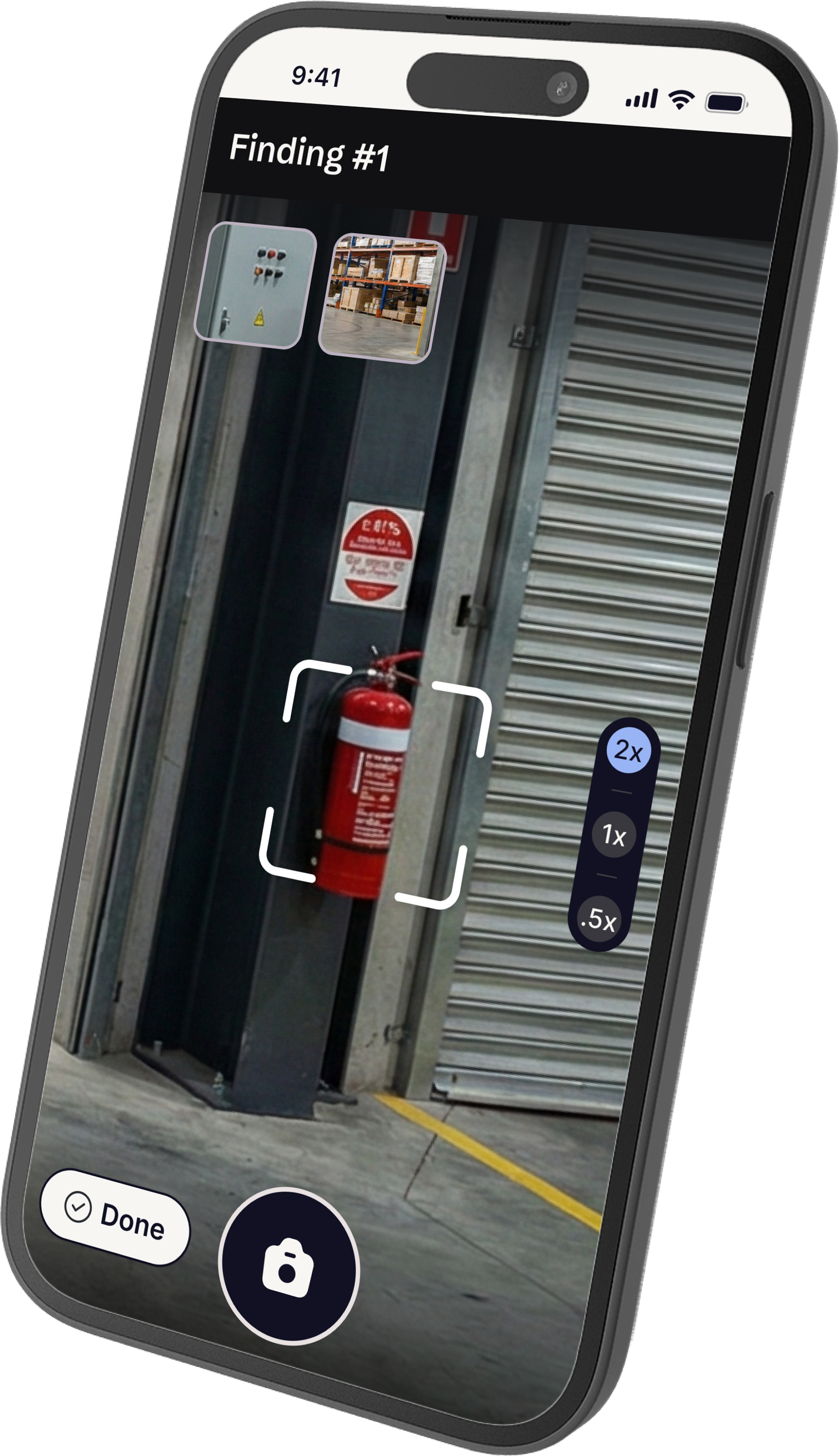
I started where I always start: with the flows. I mapped the full user journey and audited what was already there, then restructured the flows before designing a single screen. One habit that earns its keep here is that I build flows as abstractions of the goal, not the interface: “prompt the user for their location”, rather than “show a modal”. It keeps the team arguing about the right thing, and it leaves the design free to find the actual answer later instead of being boxed in by a decision made on a whiteboard.
A utilitarian aesthetic that isn't cold
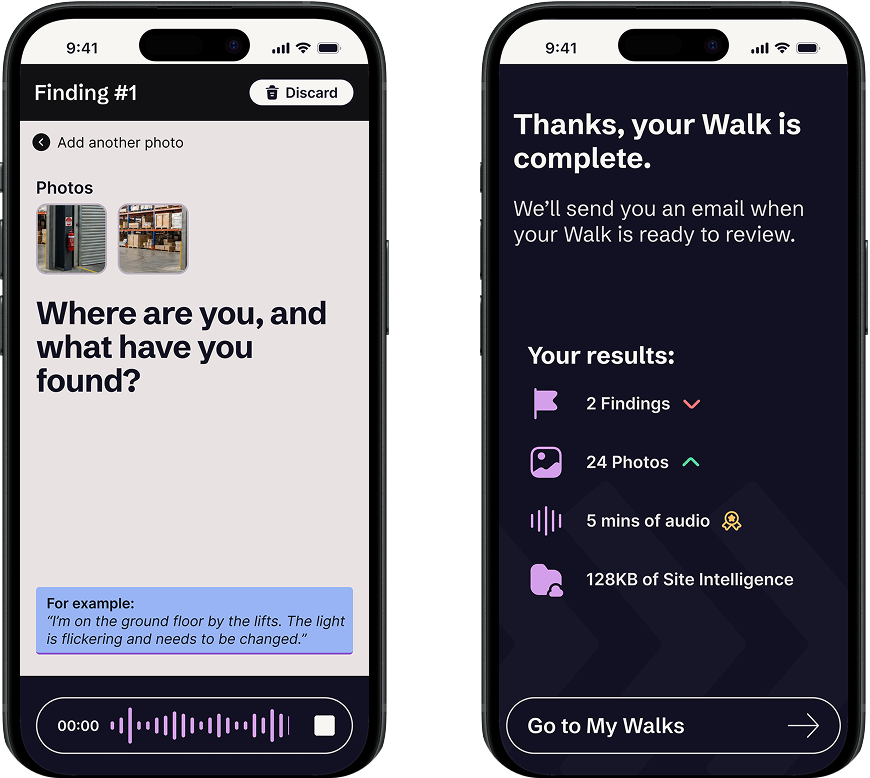
As the sole designer I own every surface: the mobile inspection app, the AI dashboard, the admin and provisioning pages, team management, reporting, the report PDFs and the emails. I grounded the design system by reading the existing React build directly, taking an inventory of what was in use and clearing out the fragmentation that had crept in over time. That habit of going into the code to ground a design decision is the throughline of how I work. Knowing what’s really there beats designing against a guess.
The look we landed on is deliberately unconventional. High-contrast and utilitarian, but warm rather than clinical: white cards on warm beige, a dark nav and footer, restrained purple accents, almost no shadow. The palette leans on slightly retro beige tones, packaged so the whole thing reads as contemporary rather than nostalgic. It’s practical, highly accessible and a little bit playful, and it’s pointedly not the cool grey-on-white that every other B2B tool defaults to. Unconventional palettes are something of a habit of mine.
AI, governed rather than prompted
There are two distinct pieces of AI work here, and they’re easy to conflate.
The first is operational. Much of the business runs on an operating layer I built so that an AI agent can work inside our actual systems under direct human instruction: Jira, the CRM, roadmapping and reporting. It’s a structured set of governance, context and tooling instructions, with human review before anything irreversible happens. The rules are written down and tied to what’s actually being done and why, so the agent stays on the rails. By my own estimate, onboarding a client account has gone from around an hour to two or three minutes. A monthly stakeholder roadmap that used to take a day or two now takes around two hours, and carries enough detail that it no longer needs a meeting to walk through.
By my own estimate, not instrumented benchmarks.
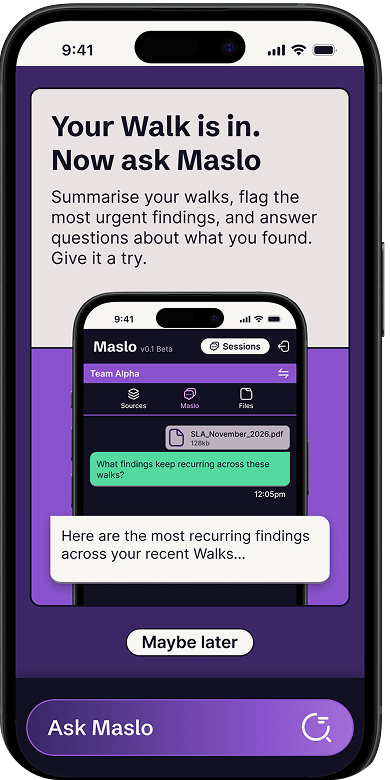
The second is the product’s own AI. SiteWalk’s analysis layer has to do something more useful than chat: it has to help someone make sense of what they found on a walk. I led the prompting and analysis design for it, and the thing that made it work was real data. I used the structured data coming out of actual walks, and out of how people interacted with the analysis surface, to teach the model the shape of what it was looking at: real examples of the data schema, drawn from genuine user journeys across several product touchpoints. That turned it from a generic assistant into something with a systematic method for helping users analyse their own sites. I also designed around the model’s weak spots instead of pretending they aren’t there: it’s unreliable at counting objects in a photo, for instance, so the design steers people to state quantities in a note rather than lean on the image. The honest scope: this is product and prompt direction. Engineering builds the feature; I decide what it should do and how it should behave.
The rollout
SiteWalk reaches its users through a large facilities-management group that puts it in front of its own clients and rolls it out across its portfolio. Much of the work has been about making SiteWalk adaptable enough to fit how they operate, so their operational teams can put it to work on the ground with confidence. Those teams have driven the rollout; the onboarding and the provisioning that absorbed it are mine. We’re now live across 22 client accounts, with 600 walks and 5,000 findings logged in the first month.
Tying it together
What ties this together is the role between the parts: a connecting layer across the stakeholders, the engineering team and the C-suite, keeping the various touchpoints of the business joined up so we make sound, well-informed decisions and keep growing.
It is also what lets a one-person design function hold every surface of the product, 22 client accounts, and a rollout that logged five thousand findings in its first month.